Safari for Travelers With Mobility Issues
GetTripGo Travel Desk · 5 min read
A Kenya safari is genuinely possible for travelers using a wheelchair or with limited mobility, and accessibility here has improved meaningfully in recent years. But there's one thing worth knowing before you get excited about any single lodge's website: there's no central accessibility certification system for Kenya's safari industry, so every claim needs to be verified directly rather than taken at face value.
Quick Answer
- Big picture: genuinely possible, with a growing number of camps offering wheelchair-adapted vehicles and roll-in rooms.
- No certification system: "accessible" claims vary widely in what they actually mean — verify specifics directly with each property.
- Biggest single upgrade: booking a private vehicle rather than a shared one.
- Common gap: grab bars exist, but wheelchair maneuvering space inside the bathroom often doesn't.
Why "Accessible" Means Different Things at Different Camps
Kenya's safari accommodation ranges from bare-ground mobile camping to permanent lodges with tiled floors and full hotel-standard facilities, and accessibility infrastructure spans an equally wide range — from none at all to genuinely well-considered design. Because no unified standard or inspection body governs these claims, one lodge's "wheelchair accessible" might mean a step-free entrance and a wide doorway, while another's means a fully adapted roll-in bathroom with a properly cleared floor plan. The only reliable approach is asking specific questions of each property rather than trusting the label alone.
The Bathroom Gap Most People Miss
A recurring, specific issue in tented camps: a bathroom might have a grab bar installed next to the toilet or shower, but no actual space for a wheelchair to pull in alongside it. Grab bars alone don't equal usability — ask directly about the clear floor space in the bathroom, in centimeters or inches if needed, rather than accepting "accessible bathroom" as a complete answer.
Vehicles: The Other Half of the Equation
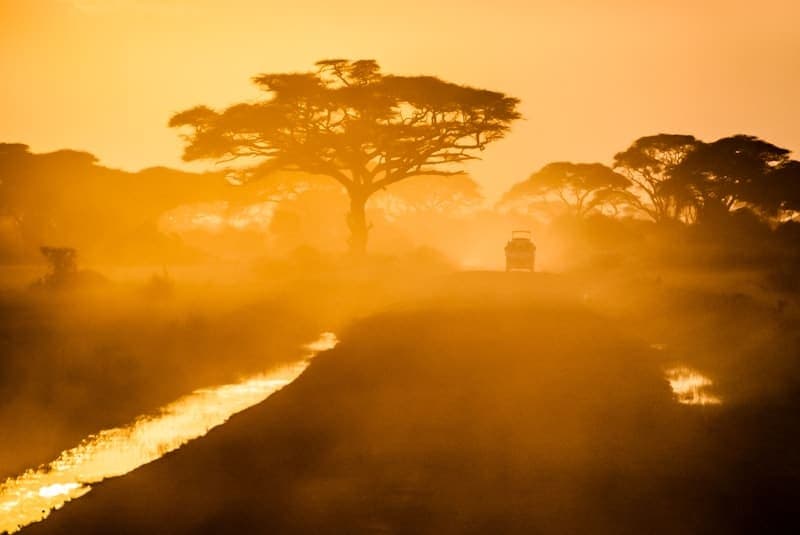
Standard safari vehicles aren't built for wheelchair access, so this needs separate confirmation from your lodge booking. A small number of specialist operators run adapted 4x4 Land Cruisers with ramps or hydraulic lifts and secure wheelchair locking systems, built specifically for rugged park terrain. If your mobility needs go beyond a standard vehicle, book through an operator who can confirm the specific vehicle type in writing, rather than assuming any safari vehicle will work.
Why a Private Vehicle Matters More Here
The added cost of a private vehicle is one of the most worthwhile investments a traveler with mobility limitations can make. It removes the pressure of boarding quickly alongside other guests, lets you set your own pace between sightings, and gives you flexibility to adjust the route if a particular track turns out to be harder to navigate than expected.
Pre-Booking Checklist
| Check | Why It Matters |
|---|---|
| Accessible vehicle | Standard safari vehicles aren't wheelchair-friendly; you need one with a ramp or hydraulic lift confirmed in writing |
| Roll-in bathroom | Ask specifically about wheelchair clearance, not just 'grab bars' -- some tented camps have bars but no room to maneuver |
| Room-to-vehicle path | Check the terrain between your room and the vehicle -- gravel, steps, and sand are common even at otherwise accessible camps |
| Private vehicle | Almost always worth the added cost -- it controls pacing, boarding time, and route flexibility |
| Airport and transfer accessibility | Confirm accessible transport at Nairobi and any connecting airstrips, not just at the lodge itself |
Where to Focus Your Search
The Masai Mara has the widest range of accessibility-considered lodges, along with Lake Nakuru and Amboseli, where several properties have made specific investments in barrier-free suites, wide pathways, and roll-in bathrooms. Nairobi itself is a reasonable starting point too — attractions like the Giraffe Centre and David Sheldrick Wildlife Trust are generally easier to navigate than remote bush camps, which makes the capital a good option for easing into the trip before heading to more remote parks.
What People Get Wrong
The most common mistake is booking based on a lodge's marketing description of "accessible" rooms without asking for specifics. Because there's no standardized accessibility rating system across Kenya's safari industry, the same word can describe very different levels of usability from one property to the next. A short, specific question list sent to the lodge directly — vehicle type, bathroom clearance, path terrain — resolves this far more reliably than a general accessibility label ever will.
Frequently Asked Questions
Are Kenya safari vehicles wheelchair accessible?
Not standard ones. A small number of specialist operators offer adapted vehicles with ramps or lifts — this needs to be confirmed and booked specifically, not assumed.
Is there an official accessibility rating for Kenya safari lodges?
No. There's no central database or certification system, so "accessible" claims vary widely between properties and should be verified directly.
Is a private vehicle necessary for travelers with mobility issues?
Not strictly required, but strongly recommended — it removes time pressure and gives you control over pacing and route flexibility that shared vehicles don't allow.
Which parks have the best accessibility infrastructure?
The Masai Mara, Lake Nakuru, and Amboseli currently have the widest range of lodges with specific accessibility investments, though this changes over time and should be confirmed per property.