Amboseli's Last Super Tuskers
GetTripGo Travel Desk · 5 min read
Amboseli is the one place in Africa where you can still reliably see a "super tusker" — a bull elephant whose ivory is so long and heavy it nearly scrapes the ground. Set against the snowcapped backdrop of Mount Kilimanjaro, it's one of the most photographed wildlife scenes on the continent, and one of the last strongholds for a kind of elephant that has almost disappeared everywhere else.
Quick Facts
- What counts as a super tusker: Tusks weighing 100 lbs (45 kg) or more per side.
- Number left: Roughly 25–30 recognized super tuskers remain in the wild, several of them in the Amboseli ecosystem.
- Best months: June–October and January–February, for both dry ground and clear Kilimanjaro views.
- Where: Amboseli National Park and the neighboring Selenkay and Kimana conservancies, southern Kenya.
What Is a "Super Tusker"?
A super tusker is an elephant, almost always an older bull, whose tusks each weigh at least 100 pounds — long enough in some cases to touch the ground when the animal lowers its head. Because ivory this large takes 40 to 60 years of undisturbed growth to develop, and because poaching has overwhelmingly targeted the biggest tusks first, true super tuskers have become extraordinarily rare. Most estimates put the global population at under 30 individuals, with the Amboseli ecosystem holding one of the largest concentrations anywhere in Africa.
That rarity is partly a conservation success story. Amboseli has been the site of one of the longest-running elephant research projects in the world, tracking individual elephants — including known super tuskers — by name, family line, and life history for more than five decades. That long-term monitoring, combined with strict anti-poaching enforcement, is a major reason these bulls have survived here when they've vanished from so much of the rest of the continent.
Where to Find Amboseli's Tuskers
Amboseli's elephants spend much of the day around its spring-fed swamps — Enkongo Narok, Olokenya, and the area near Observation Hill — which stay green year-round thanks to meltwater filtering down from Kilimanjaro itself. Herds, and the resident bulls among them, are drawn to these swamps for water and to graze on the reeds, which makes them some of the most consistent wildlife-viewing spots in the park regardless of season.
Beyond the park boundary, the Selenkay and Kimana conservancies extend the same elephant corridors into community-owned land, often with fewer vehicles and a chance at night drives and walking safaris, which aren't permitted inside the national park itself.
Why Kilimanjaro's Shadow Matters
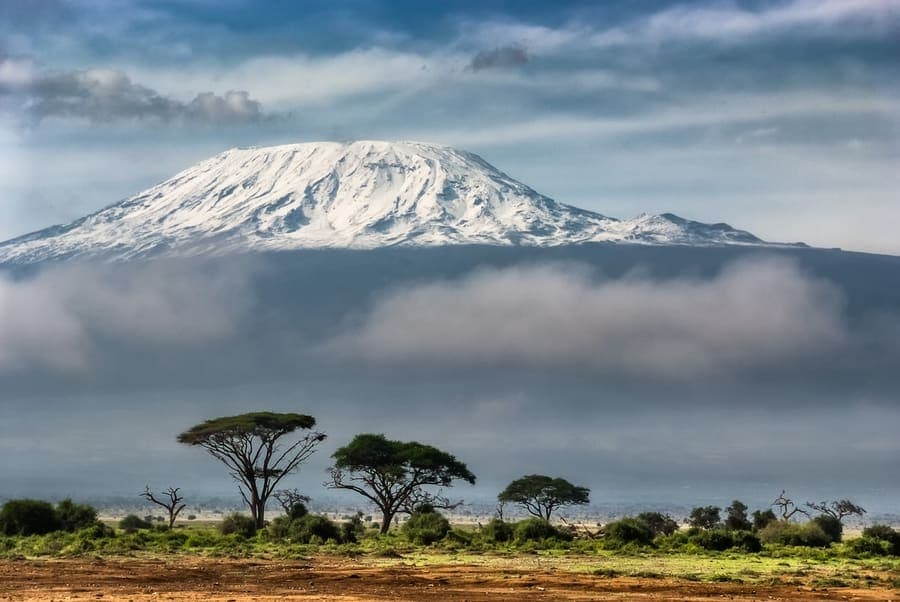
Kilimanjaro sits just across the border in Tanzania, but Amboseli, on the Kenyan side, has the better angle on it — a flat, open plain with almost nothing between the elephants and the mountain. That combination of the world's tallest free-standing mountain, its permanent snowcap, and Africa's largest land mammal in the same frame is what has made Amboseli's elephants some of the most photographed wildlife on the continent, appearing in documentaries, magazine covers, and safari brochures for decades.
Kilimanjaro is frequently wrapped in cloud by midday, so the classic clear-mountain shot is much more reliably caught at dawn, before the day heats up and haze builds.
Best Time to See Them
The dry months from June through October concentrate elephants more tightly around Amboseli's swamps as surrounding water sources dry up, making sightings easier and more predictable. January and February offer a second window — the short rains have passed, the air is clear, and Kilimanjaro's summit is visible more consistently than at almost any other time of year.
April and May, the long rains, bring the heaviest cloud cover over the mountain and the most dispersed elephant movement, since water becomes available across a much wider area of the ecosystem.
Conservation Status and Threats
Super tuskers face a specific, cruel irony: the very trait that makes them remarkable — enormous ivory — is exactly what made them targets during decades of poaching across Africa. Because tusk size is partly genetic, the sustained killing of the largest-tusked bulls has arguably reduced average tusk size in elephant populations more broadly, making each remaining super tusker genetically significant as well as visually spectacular.
Amboseli's tuskers are closely monitored and heavily protected, but they still face threats when they range beyond the park into community and farmland areas, where human-elephant conflict and occasional poaching remain risks. Conservation groups working across the wider ecosystem focus heavily on this exact problem — keeping habitat corridors open so elephants aren't forced into unprotected land.
Frequently Asked Questions
What makes an elephant a "super tusker"?
An elephant is generally considered a super tusker when each tusk weighs 100 pounds (45 kg) or more — a threshold reached by only a small handful of bulls alive today, most of them decades old.
How many super tuskers are left in the world?
Estimates generally put the number at around 25 to 30 worldwide, with the Amboseli ecosystem holding one of the largest known concentrations of any single region.
When is Kilimanjaro most visible from Amboseli?
Early morning, before cloud builds up over the mountain later in the day. The dry months of June–October and January–February also offer the clearest overall visibility.
Is Amboseli good for first-time safari visitors?
Yes — it's compact, close to Nairobi, and known for consistent, close-range elephant sightings, making it one of the more reliable parks for travelers on a shorter itinerary.