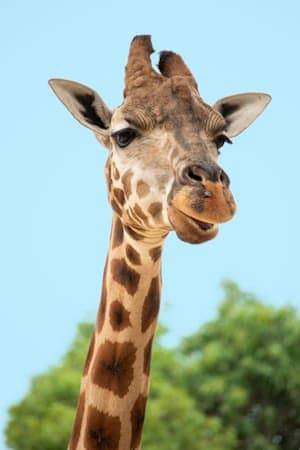
Giraffes of Kenya: Reticulated, Masai and Rothschild's
GetTripGo Travel Desk · 5 min read
Most first-time visitors assume "giraffe" is just one animal to check off the list. Kenya actually hosts three genetically distinct species — more than any other country on Earth — and once you know what to look for, telling them apart from a moving vehicle takes seconds, not guesswork.
Quick Facts
- Masai giraffe: Southern and central Kenya — Mara, Amboseli, Tsavo. Messy, leaf-shaped spots down to the hooves.
- Reticulated giraffe: Northern Kenya — Samburu, Laikipia, Meru. Clean polygon patches divided by bright white lines.
- Rothschild's giraffe: Lake Nakuru, and Nairobi's Giraffe Centre. No markings below the knee — looks like it's wearing white socks.
- Conservation status: All three are classified as Endangered.
Masai Giraffe: The One Most Visitors See
The Masai giraffe is the giraffe most safari visitors actually encounter, since it ranges across the classic southern circuit — the Masai Mara, Amboseli, Tsavo, and Nairobi National Park. Its coat shows messy, ragged-edged spots that look almost like torn leaves, extending all the way down to the hooves rather than stopping partway up the leg. It's the most widespread of Kenya's three species, and the one that appears in most classic safari photographs against a Kilimanjaro or Mara backdrop.
Reticulated Giraffe: The Northern Specialist
Also known as the Somali giraffe, the reticulated giraffe is confined to northern Kenya — Samburu, Buffalo Springs, Shaba, and the Laikipia conservancies are the reliable places to find it. Its pattern is the easiest of the three to identify at a glance: large, clean-edged liver-brown polygons separated by a bright white grid, giving the coat a distinctive net-like appearance. With an estimated 8,500-15,000 individuals left in the wild, seeing one in Samburu is a genuine highlight for travelers extending their trip north of the classic southern circuit.
Rothschild's Giraffe: The Rarest and the One With "Socks"
Rothschild's giraffe, sometimes called the Baringo giraffe after Kenya's Lake Baringo region, is the rarest of the three, with roughly 1,600-2,000 individuals left in the wild as of recent counts. It's easy to confuse with the Masai giraffe at a distance, since both have jagged brown patches, but Rothschild's markings are paler, less ragged, and — the giveaway — the lower legs are completely unmarked, giving the impression of white stockings. Lake Nakuru National Park is the most reliable place to see them in the wild, and Nairobi's Giraffe Centre offers a close, hand-feeding encounter with the species for visitors who won't make it further afield.
Telling Them Apart at a Glance
Location is often the fastest clue — Masai giraffes dominate the south, reticulated giraffes are a northern specialty, and Rothschild's are concentrated almost entirely around Lake Nakuru and Nairobi. When location alone isn't conclusive, look at the legs: spots running all the way to the hooves means Masai, a clean net pattern with sharp white lines means reticulated, and bare, unmarked lower legs mean Rothschild's. Each giraffe's individual pattern is also as unique as a fingerprint, which researchers use to identify specific animals across years of study.
Why All Three Are Endangered
Giraffes generally receive far less conservation attention than lions, elephants, or rhinos, despite steep population declines across Africa — sometimes referred to as a "silent extinction" because the drop has been so under-reported. Habitat loss, poaching for meat and bones, and human-wildlife conflict as rangeland shrinks are the primary threats behind all three Kenyan species now carrying an Endangered classification. Organizations like the Giraffe Conservation Foundation work directly with community conservancies in giraffe range areas to stabilize numbers, particularly for the reticulated giraffe in the north.
Frequently Asked Questions
How many giraffe species are in Kenya?
Three — Masai, reticulated, and Rothschild's — more than any other country in the world.
What's the easiest way to tell giraffe species apart?
Check the legs: spots to the hooves means Masai, a clean net pattern with sharp white lines means reticulated, and bare, unmarked lower legs mean Rothschild's.
Where can I see reticulated giraffes in Kenya?
Samburu, Buffalo Springs, Shaba, and the Laikipia conservancies in northern Kenya are the most reliable locations.
Are all Kenyan giraffe species endangered?
Yes — Masai, reticulated, and Rothschild's giraffes are all currently classified as Endangered, driven mainly by habitat loss and poaching.