Rhino Conservation: The Fight to Save a Species
GetTripGo Travel Desk · 5 min read
Kenya holds most of what's left of East Africa's black and white rhino population, and almost all of it is concentrated in a handful of intensively protected sanctuaries. Rhino conservation here isn't a background activity alongside general wildlife protection — it's a specific, resource-heavy effort built around fenced sanctuaries, round-the-clock monitoring, and, for the northern white rhino, a last-ditch scientific rescue.
Quick Facts
- Where to see them: Ol Pejeta Conservancy and Lake Nakuru National Park hold most of Kenya's black and white rhino.
- Two species, two stories: Black rhino are critically endangered and browse on shrubs; white rhino are less endangered and graze on grass.
- The northern white rhino: Only two individuals remain worldwide, both female, both living under guard at Ol Pejeta.
- Protection model: Fenced sanctuaries, dedicated ranger units, and often armed guards assigned specifically to rhino, separate from general park security.
Why Rhinos Need a Different Kind of Protection
Rhino horn is worth more by weight than gold or cocaine in some black markets, driven by demand — mostly across parts of Asia — where it's used as a status symbol and marketed as a cure for various ailments despite being made of keratin, the same material as human fingernails. That price makes rhinos a uniquely high-value poaching target, which is why they typically get a level of dedicated, fenced protection that most other species in the same parks don't require.
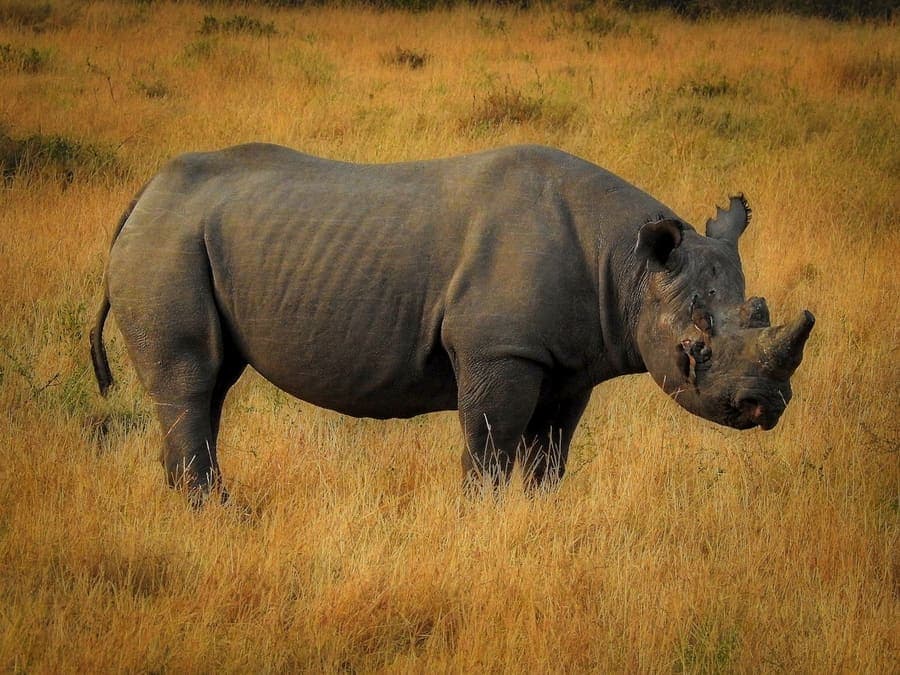
Many sanctuaries also physically dehorn rhinos under sedation as a deterrent — the horn regrows over time, similar to a fingernail, but a hornless rhino is a far less attractive target for poachers in the interim. It's an uncomfortable-looking but effective practice, and one of several tools conservancies use alongside armed patrols and monitoring.
Black Rhino vs White Rhino
The two species are easy to tell apart once you know the difference despite similar coloring. Black rhino have a pointed, hooked upper lip built for browsing on leaves and shrubs, tend to be more solitary, and are generally more skittish around vehicles. White rhino have a wide, flat lip suited to grazing on grass, are more commonly seen in small groups, and tend to be calmer around safari vehicles — which is part of why white rhino sightings often feel more relaxed and prolonged than black rhino ones.
Black rhino are classified as critically endangered, with numbers still recovering from a catastrophic population collapse in the late 20th century. White rhino numbers are considerably higher and classified as near threatened, though the northern white rhino subspecies specifically has effectively gone extinct in the wild.
The Last Two Northern White Rhinos
Ol Pejeta Conservancy is home to Najin and Fatu, a mother-and-daughter pair who are the only two northern white rhinos left on the planet, both under permanent armed guard. With no living males of the subspecies remaining, natural reproduction is impossible, so scientists have turned to advanced reproductive technology — harvesting eggs from Fatu and using stored sperm from deceased males to create embryos, which are then implanted into southern white rhino surrogate mothers in an attempt to keep the subspecies from disappearing entirely.
It's a genuinely unusual thing to be able to see in person — visitors to Ol Pejeta can view Najin and Fatu under guard, making it one of the only places in the world where you can witness the final stage of a subspecies' story unfolding in real time, alongside the science trying to prevent its ending.
Where to See Rhinos in Kenya
Ol Pejeta Conservancy in Laikipia holds the largest black rhino sanctuary in East Africa alongside the northern white rhino pair, and is generally considered the most reliable place in Kenya for rhino sightings. Lake Nakuru National Park is fully fenced and also holds a substantial population of both black and white rhino, making it a strong option for travelers combining a rhino sighting with the park's other wildlife and its lakeside setting.
Frequently Asked Questions
Where is the best place to see rhinos in Kenya?
Ol Pejeta Conservancy and Lake Nakuru National Park hold the majority of Kenya's black and white rhino population and are the most reliable places for sightings.
How many northern white rhinos are left in the world?
Only two — Najin and Fatu, a mother-and-daughter pair living under armed guard at Ol Pejeta Conservancy, both female, meaning natural reproduction is no longer possible.
What's the difference between black and white rhinos?
Black rhino have a pointed lip for browsing shrubs and are more solitary and skittish; white rhino have a flat lip for grazing grass and are typically calmer and seen in small groups.
Does dehorning hurt the rhino?
No — it's done under sedation and the horn is made of keratin, similar to a fingernail, so it regrows over time without lasting harm to the animal.