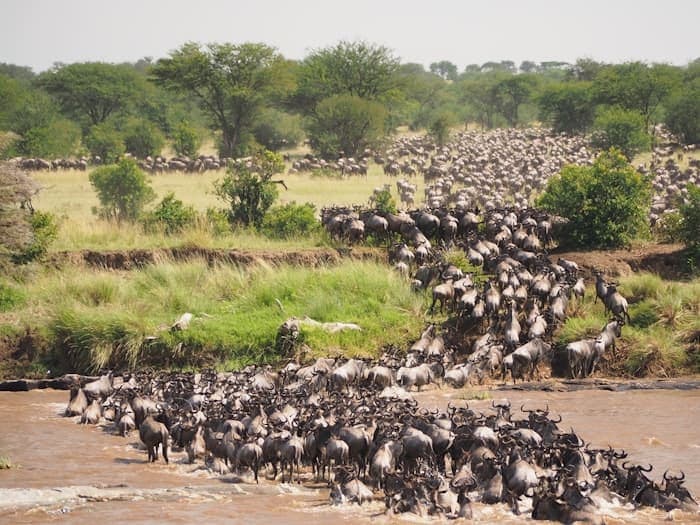
The Wildebeest Crossing: 2026 Migration Forecast
GetTripGo Travel Desk · 5 min read
No one can promise an exact date for a Mara River crossing — the herds move on rainfall, not a calendar. But migration patterns repeat closely enough year to year that a genuinely useful forecast is possible. Here's what current 2026 forecasting from safari guides and migration trackers points to, and how to plan around it rather than against it.
Quick Facts
- Expected arrival: Herds begin moving toward the Mara from mid-to-late July 2026.
- Peak crossing window: August through early September, historically the most reliable stretch.
- Return crossings: Herds typically cross south again around mid-September through October or November.
- No guarantees: Exact timing shifts every year based on rainfall — this is a forecast, not a schedule.
How a Migration Forecast Actually Works
Wildebeest move for one reason: fresh grass, which follows the rain. Forecasters build their predictions from long-term migration patterns, rainfall cycles, and grass regeneration trends rather than fixed calendar dates. That's why every credible 2026 forecast lands in roughly the same range — late July through October — while still stressing that the precise week of any single crossing can't be pinned down months in advance.
The 2026 Season, Month by Month
- Late June: The first "scouts" reach the Sand River in the northern Mara — a quiet preview before the main herds arrive, with far fewer vehicles around.
- Mid-to-late July: The bulk of the herds begin moving into the Mara from the northern Serengeti, with early, smaller crossings as the front runners test the water.
- August–early September: The peak window. This is when the largest, most dramatic crossings are most likely, though it also brings the biggest crowds and highest prices.
- Mid-September onward: Herds begin shifting back toward the Mara Triangle and crossing south again as short rains approach Tanzania.
- November–December: The migration continues its return into the southern Serengeti, dispersing across the plains ahead of the next calving season.

Why Longer Stays Beat Precise Dates
Crossings happen multiple times throughout the season, not just once — herds cross back and forth as rain patterns shift between the Mara and Tanzania side. That means the length of your stay matters more than which exact week you book. A short two- or three-night visit gives a moderate chance; four nights meaningfully improves the odds; five or more nights during the peak window gives a very high chance of witnessing at least one crossing.
August vs. September: The Trade-Off
August is the most iconic month and typically has the highest crossing frequency — but it's also peak season, meaning more vehicles at every sighting and higher lodge prices. September often delivers equally dramatic crossings with noticeably fewer crowds, making it a strong choice for travelers prioritizing a quieter experience over the absolute highest odds.
Booking Timeline for 2026
Camps closest to the main crossing points routinely sell out 12 to 18 months in advance for the July-September window. If the peak season is the priority, booking early isn't just advisable — it's often the only way to secure a camp with genuinely good access to the crossing points rather than a long daily transfer.
Frequently Asked Questions
When exactly will the Mara River crossings happen in 2026?
No exact date can be predicted months in advance — crossings depend on rainfall. Current forecasts point to a peak window between August and early September, with activity possible from mid-July through November.
Is August or September better for the 2026 migration?
August typically has the highest crossing frequency but also the biggest crowds. September often offers equally dramatic crossings with noticeably fewer vehicles at each sighting.
How many nights should I book to see a crossing?
Longer stays matter more than exact dates. Four nights gives a high chance during the peak window, and five or more nights gives a very high chance, since crossings happen repeatedly throughout the season rather than on a single day.
How far in advance should I book for the 2026 migration season?
Camps near the main crossing points for the July-September window often sell out 12 to 18 months ahead, so early booking is strongly recommended for peak-season access.