The Wildebeest River Crossing: A Photographer's Guide
GetTripGo Travel Desk · 8 min read
No single moment in African wildlife photography is more chased, more unpredictable, or more rewarding than a Mara River crossing. Thousands of wildebeest bunch at the water's edge, hesitate for what can feel like hours, then commit all at once into water where crocodiles are already waiting. Getting the shot depends less on luck than on knowing where to position and how long you're willing to wait.
Quick Facts
- Best months: Roughly July through October, though exact timing shifts year to year with rainfall.
- Top viewing points: Lookout Hill and Paradise Plains along the Mara River.
- Typical wait: Anywhere from under an hour to most of a day — herds can hesitate at the water's edge for a long time before committing.
- Key gear: A telephoto zoom (200–400mm range) and a fast shutter speed for freezing water and motion.
Why the Crossing Happens
The Mara River sits directly in the path of the wildebeest and zebra herds as they move north from Tanzania's Serengeti into Kenya's Masai Mara in search of fresh grazing. The river itself isn't the goal — it's an obstacle the herds have to cross to reach it, and because wildebeest are instinctively hesitant around water and reluctant to be first, thousands can build up on the bank before any single animal actually commits to the crossing.
Best Crossing Points to Position For
Lookout Hill offers elevated ground overlooking the river, giving a wide view of the herd's approach and enough time to reposition before a crossing actually starts. Paradise Plains, closer to the water itself, is where many of the most-published crossing photographs are taken, with open sightlines along both banks.
Which side of the river a guide chooses to wait on matters too: the Mara Triangle side tends to be quieter with fewer vehicles, while the main reserve side offers a wider choice of known crossing points but can draw larger crowds once a herd starts gathering.
What Actually Happens During a Crossing
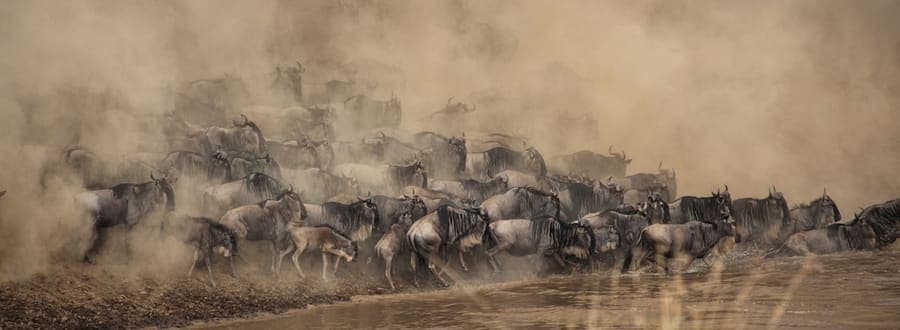
The buildup is usually the longest part. Wildebeest gather in a growing, restless mass at the water's edge, often pacing back and forth along the bank for a long stretch before anything happens. Eventually one animal — sometimes seemingly at random — breaks and jumps in, and the rest follow in a sudden, chaotic surge. Crocodiles, which have often been visible waiting in the water beforehand, take advantage of the panic, and the crossing itself typically lasts only a few frantic minutes even after an hours-long wait.
Camera Gear and Settings for the Crossing
- Use a telephoto zoom in the 200–400mm range — the action can happen closer or further away than expected, and a fixed long lens leaves no flexibility.
- Set a fast shutter speed, at least 1/1000s, to freeze splashing water and mid-air leaps.
- Switch to continuous/burst shooting mode before the crossing starts — the decisive moment often lasts only a second or two.
- Keep a wider lens or second body within reach for the full chaotic scene, not just tight action shots.
- Position with the sun behind you where possible, since river crossings often happen with harsh midday light reflecting off the water.
Patience Is the Real Requirement
There's no way to guarantee a crossing on any single day — herds can gather at the bank and disperse without crossing at all, sometimes repeatedly, before finally committing hours or even days later. Guides read behavioral cues like pacing, bunching, and increased tension at the water's edge to judge how close a crossing might be, but the honest answer is that patience matters more than any camera setting. Building two or three days near the river into an itinerary, rather than a single afternoon, meaningfully improves the odds.
Frequently Asked Questions
Can I guarantee I'll see a river crossing?
No — crossings depend on herd behavior and timing that can't be scheduled. Building multiple days near the river into your itinerary, rather than a single visit, gives the best realistic odds.
How long does a crossing actually take?
The buildup can take hours, but the crossing itself is usually over within a few frantic minutes once the herd commits.
What lens is best for photographing a river crossing?
A telephoto zoom in the 200–400mm range offers the flexibility to react as distance to the action changes, which a single fixed focal length can't match.
Are crocodiles a real danger during crossings?
Yes, to the wildebeest — crocodiles in the Mara River regularly take advantage of the chaos to make kills during crossings, which is part of what makes the spectacle so dramatic to witness.